
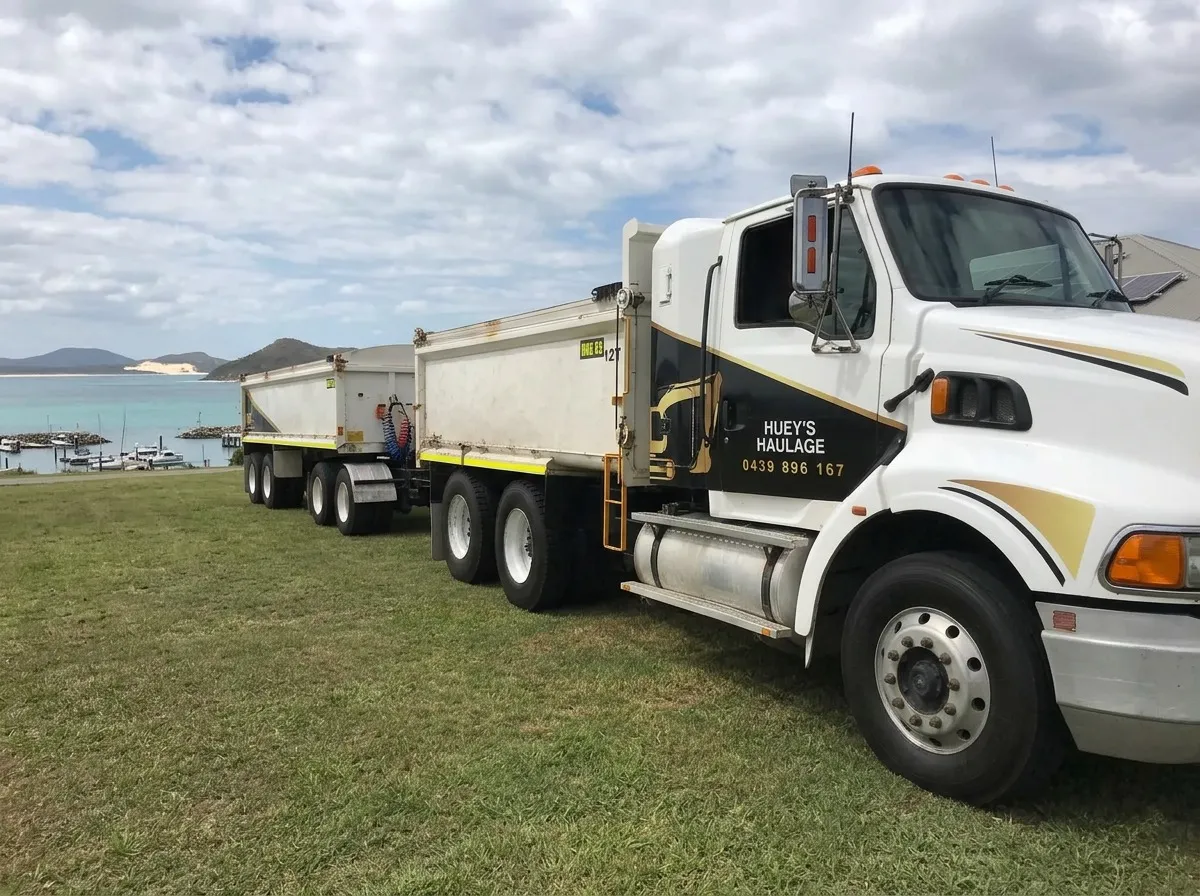
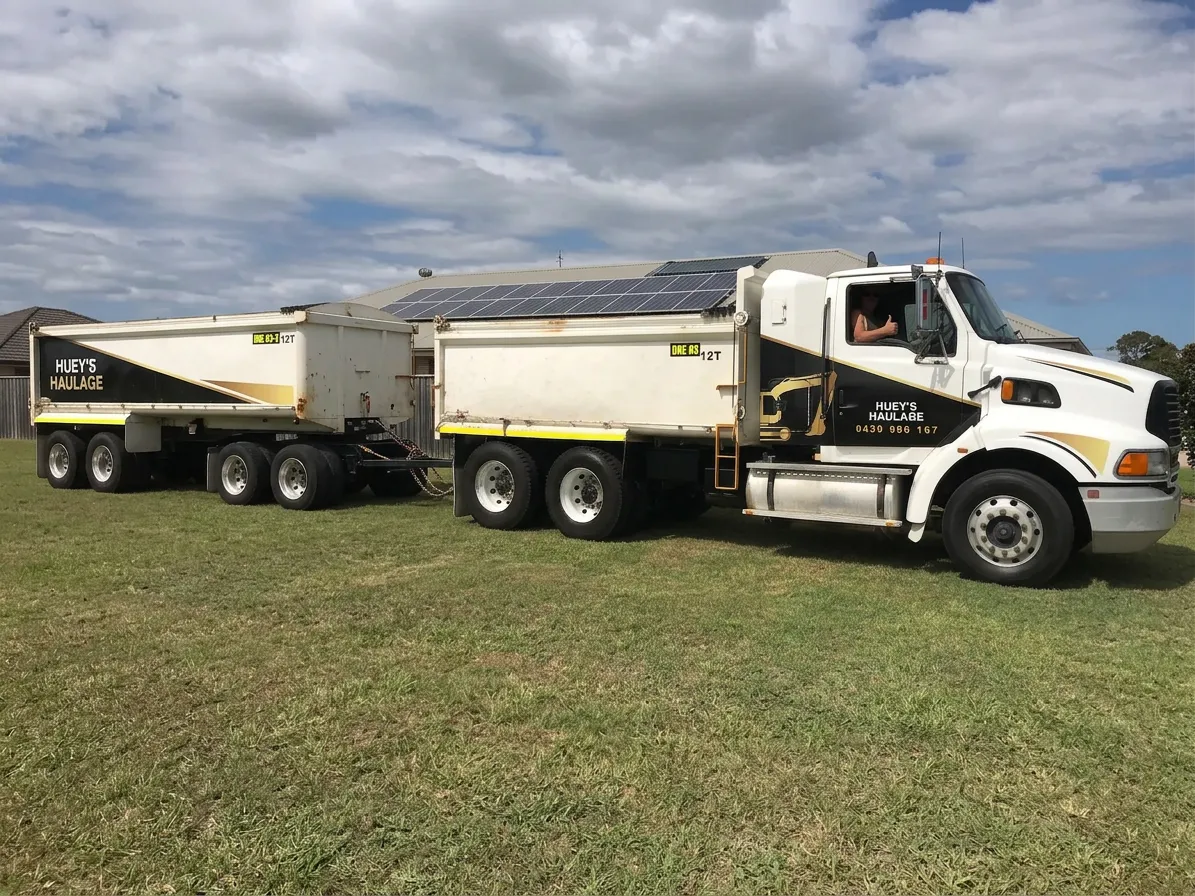
Bulk Cartage in Half the Number of Runs
On a bulk job, the number of truck movements is usually what drives both the cost and the time. Every extra run adds fuel, hours and another trip through site access that may already be tight. At Huey's Haulage, we provide truck and dog hire across Port Stephens for earthworks, quarry runs and construction material cartage.
A truck and dog carries roughly double what a standard tipper does in one movement, which is what makes it worth using once volumes are large enough to justify the size. On smaller or tighter sites, tipper hire is usually the more practical option.
Call 0439 896 167 with your volumes and access details and we'll tell you which one suits.
When a Truck & Dog Is the Right Call
The size that makes a truck and dog efficient is also what limits where it can go, so the decision comes down to a few things.
- Volume is the first test. Once you're moving enough material that a standard tipper would need twice the runs, the larger combination usually costs less per tonne even at a higher hourly rate.
- Access decides whether it's viable at all. The combination needs room to turn, reverse and tip, which rules out narrow residential streets and sites with tight internal circulation.
- Material type matters for loading. Quarry products, aggregates, sand and excavated spoil all load quickly with an excavator or loader, which is what keeps cycle times down.
- Distance changes the maths. The further the haul, the more the larger payload works in your favour, since fewer round trips means fewer hours on the road.
Frequently Asked Questions
A truck and dog is a tipper truck towing a separate tipping trailer, known as the dog trailer, with both bodies carrying material. The combination moves substantially more in one trip than a rigid tipper, which is why it's standard on bulk earthworks and quarry cartage.
Length and turning circle are the limiting factors. The combination needs suitable access, room to manoeuvre and firm level ground to tip on, so tight residential blocks and confined sites are generally better suited to a smaller rigid tipper.
An excavator or loader fills both bodies from the side, working along the combination rather than repositioning between loads. Balanced loading matters, because mass has to sit within the legal limits for each axle group rather than just the total.