
Machines Sized to Your Access, Operators Included
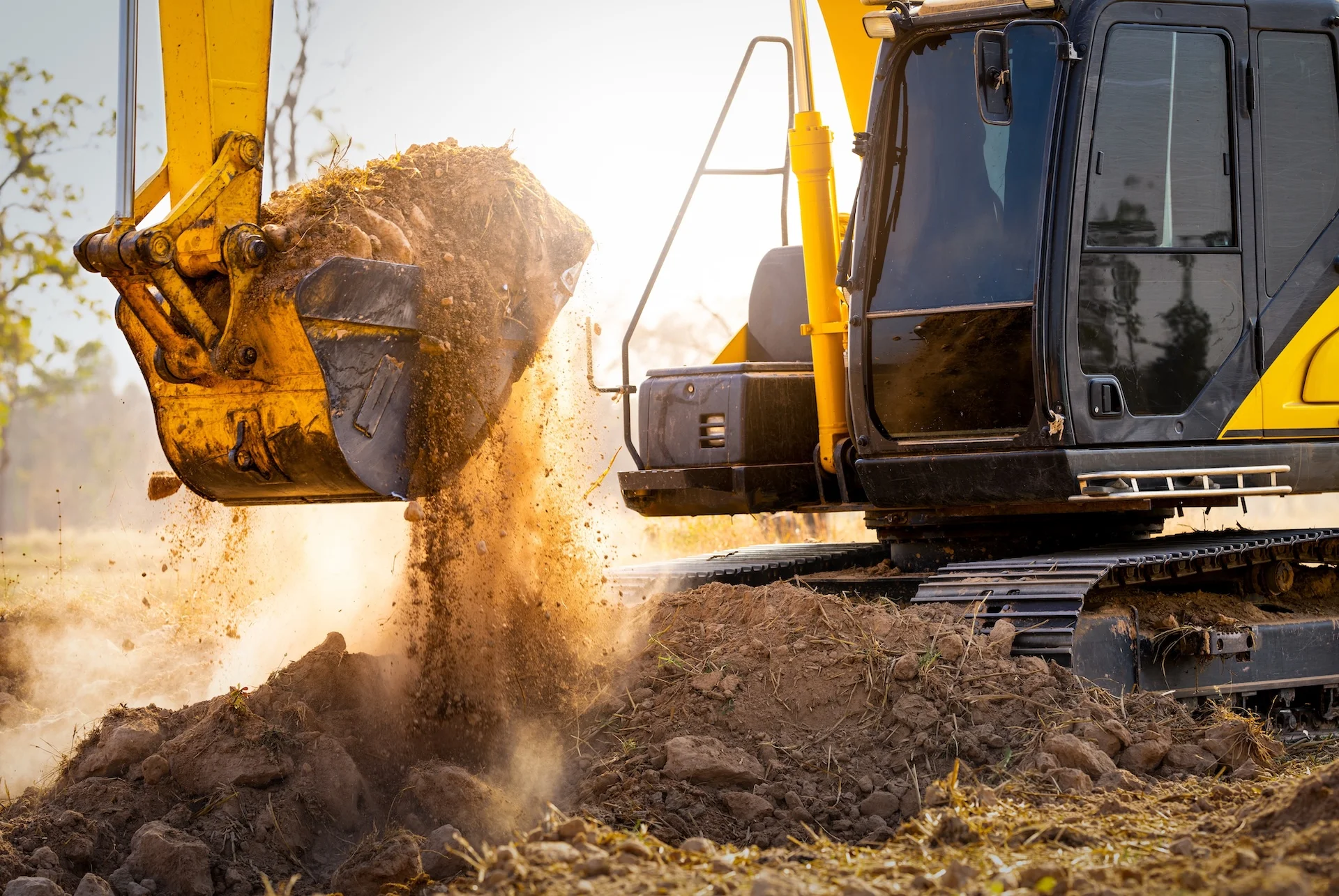
The biggest machine that fits isn't always the right one. Access, ground conditions and how much detail the work involves matter more than raw capacity, and an oversized excavator on a tight block just creates a second problem to solve. At Huey's Haulage, we offer excavator hire throughout Port Stephens for trenching, bulk digs, site preparation, footings, pool excavations and detailed finishing work.
Every one of our excavators goes out with an experienced operator at the controls. Spoil coming off the dig can leave on our own trucks through soil removal, so it doesn't sit on site waiting for a separate booking.
Call 0439 896 167 with your access and the work involved.
Getting the Machine Choice Right
A few things decide which machine goes out, and they're worth thinking through before booking.
- Access sets the upper limit. Gate widths, side passages, overhead clearance and driveway grades all determine what can physically reach the work area, and it's worth measuring rather than estimating.
- Ground conditions decide whether tracks or rubber are appropriate. Finished driveways, lawns and paving need protection or a machine that won't mark them, while soft or wet ground needs flotation more than weight.
- The work itself sets the attachment. Buckets, augers, rippers and breakers all suit different tasks, and having the right one on the machine is usually the difference between a straightforward day and a slow one.
- Spoil handling should be sorted before the dig starts. A machine can only work as fast as material moves away from it, so cartage capacity needs to match digging capacity.
Frequently Asked Questions
Machine size is usually decided by access rather than by the work itself, since a standard side gate limits what can get through to a backyard. Larger machines dig faster, but on a confined block that advantage disappears once the machine can't position itself properly.
Slew radius is the main consideration, since the counterweight swings out behind the machine as it rotates. Overhead powerlines carry a legal exclusion distance as well, and underground services need locating and marking before any digging starts.
Trenching covers stormwater and sewer runs, water and gas lines, electrical and telecommunications conduits and strip footings. Depth and width follow the relevant design or standard, and the trench usually needs backfilling and compacting in layers once the service is laid.